
Seed Cycling: Can Four Simple Seeds Support Your Hormones?
Nov 06, 2026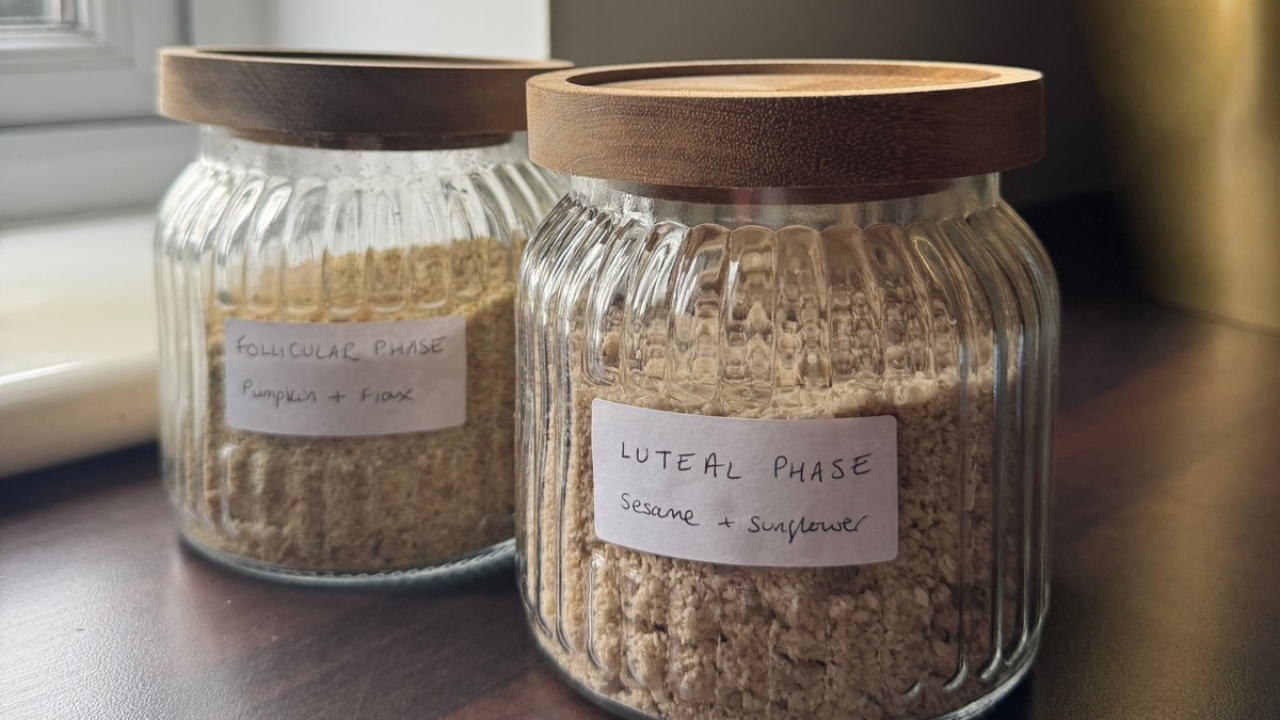
As a woman, your hormones naturally fluctuate throughout your menstrual cycle, and the different phases during the month, bring changes in your oestrogen and progesterone levels.
Every woman is different, but if your hormones aren't in balance, it can cause a wide range of physical and emotional changes including irregular periods, premenstrual syndrome and issues with fertility.
I'm a huge advocate for using food as natural medicine alongside medication when it's necessary. Food is more than just flavours, textures and something to enjoy; food is also nature's medicine.
What is seed cycling?
Seed cycling has been around for hundreds of years and is a simple, natural approach to help support hormone balance between your oestrogen and progesterone levels, by eating a rotation of two different seed pairings during the follicular and luteal phases of your cycle.
This can help to relieve symptoms of PMS and irregular periods, support fertility and reproductive health, enhance mood and energy levels, and the omega-3 fatty acids also support healthy skin, hair and nails too! They really are the superfoods in such a tiny seed.
Now this isn't to say that by adding in a few seeds to your day will be the single magic bullet to fixing your hormones completely, but seed cycling has completely transformed a lot of women's issues with their hormones too.
Whether you are currently experiencing hormonal imbalance or you want to take care of your health, it's worth introducing seed cycling into your meal planning. With no side effects and mimimal effort to introduce this method to your day-to-day, there's absolutely everything to gain!
Here's an overview of seed cycling and how you can easily add this into your diet to support your hormonal health.
Days 1-14: The Follicular Phase
During your first half of your menstrual cycle, including flaxseeds and pumpkin seeds that are rich in lignans and phytoestrogens, helps to promote oestrogen production. This helps to support follicle development and the growth of the uterine lining.
Daily combination:
- 1 tablespoon of ground flaxseeds
- 1 tablespoon of pumpkin seeds
Why these seeds?
Flaxseeds are rich in fibre, plant-based omega-3 fatty acids (ALA) and lignans which are plant compounds that can either bind to or block oestrogen receptors, which can help to promote more of a balance.
Pumpkin seeds contain zinc which is a key mineral for reproductive health, as well as magnesium and healthy fats.
Together, these nutrients help to naturally regulate oestrogen levels by improving levels where they might be low, and preventing excess build up too.
Days 15-28: Luteal Phase
In your second half of your cycle, sesame seeds and sunflower seeds that are rich in omega-3 fatty acids and zinc, are amazing at helping to boost progesterone levels, support the maintenance of the uterine lining and prepare the body for potential pregnancy.
Daily combination:
- 1 tablespoon of sesame seeds
- 1 tablespoon of sunflower seeds
Why these seeds?
Sesame seeds contain lignans, fibre and minerals, and sunflower seeds are particularly rich in vitamin E and provide a source of healthy unsaturated fats.
Combined, these nutrients help aid antioxidant protection and normal cell function as well as support your health in general.
How can I easily add them into my diet?
The quality of the seeds and how they're stored will affect how much nutritional value you gain from them. Ideally, buying organic, whole seeds is best. Pre-ground seeds like flaxmeal are great for convenience, however they may oxidise more quickly and lose nutritional value.
Weigh out the whole seeds first (I recommend weighing out 100g of each seed), and then add to a food blender to ground down. This makes it a lot easier to digest and to add into smoothies, porridge and yoghurts for example.
Combine the blended seeds into a glass jar and pop into your fridge to prevent them from going rancid. This way you'll also be reminded to eat them when you open the fridge in the morning, and by combining the seeds for each phase into one jar, it removes the need to have to remember which combination of seeds you need for each part of your cycle.
When you want to eat a portion, just add 1 tablespoon of each ground seeds for the stage of your cycle you're in (or 2 tablespoons of the combined ground seeds if you've blended these).
Here are some simple ideas you can add the seeds into your diet to get you started:
Sprinkle or add into:
- Greek yoghurt or kefir with fruit
- Porridge
-
Overnight oats
-
Smoothies
-
Homemade energy balls
-
Salads and roasted vegetables
-
Soups for a bit of extra crunch
What if my cycle isn't 28 days?
No two women are the same, and this is also true when it comes to your menstrual cycle. The average menstrual cycle is around 28 days, but for some women their normal length can be between 24 and 34 days. If this is the case for you, still follow the guide for a 28 day cycle and see how it may help with more regularity.
If you've never heard of seed cycling before or were unsure on what it would realistically look like day-to-day, I hope you now feel inspired to start introducing these tiny but mighty seeds into your nutrition. From easing symptoms of PMS, irregular periods, cramps, fertility and improving reproductive health as well as taking care of your skin, hair and nails, they are proof that micronutrients and fibre are key for not just healthy eating but for vitality too.
Want to recieve more nourishing recipes like this straight to your inbox every Friday?
Sign up to receive Nourish Weekly for free and make your meal planning a lot easier every week
